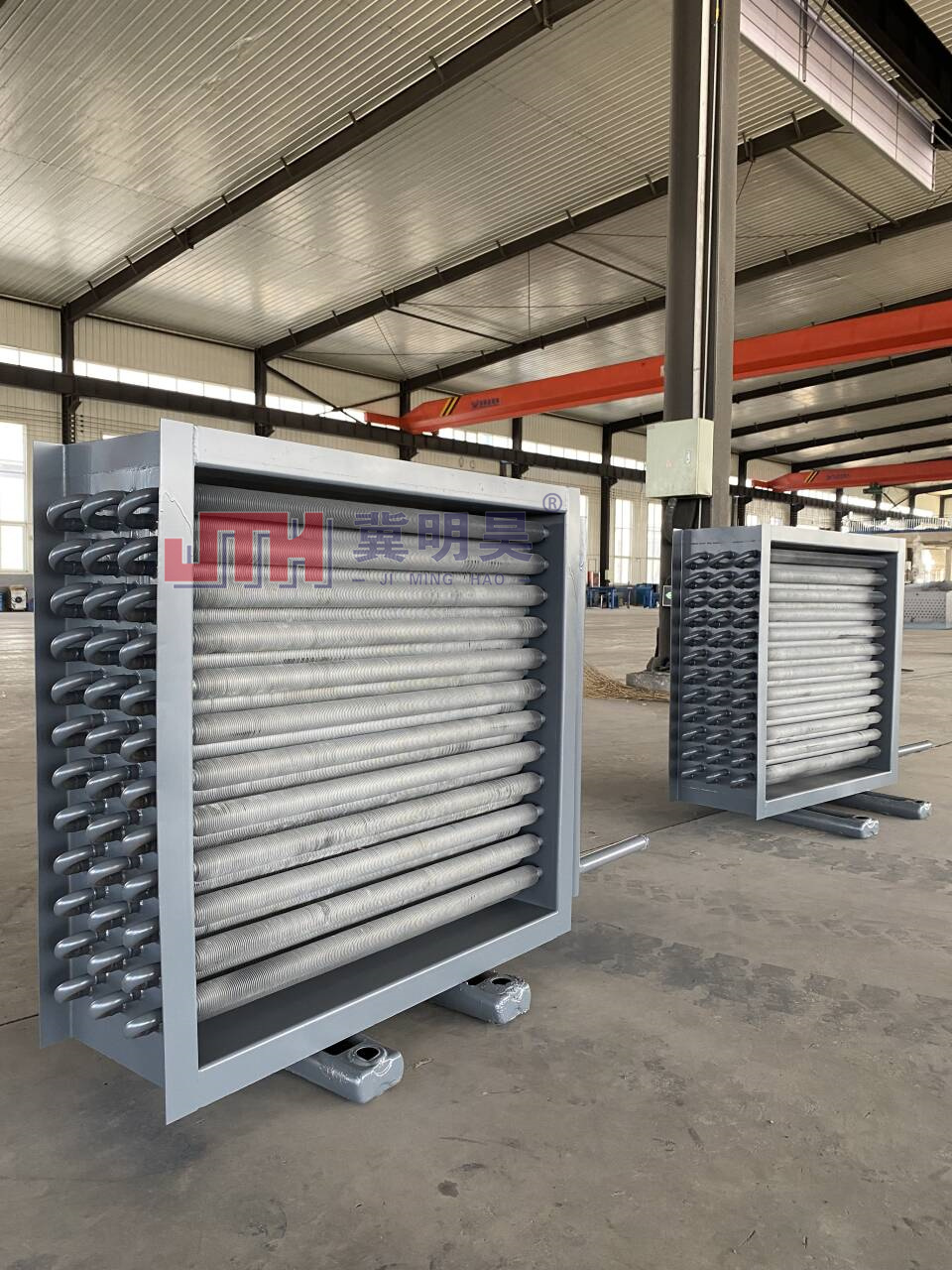
Finned tube radiators for drying are applicable to food, wood and chemical drying processes!
文章来源:hsjmh 发表时间:2026-10-20Drying finned‑tube radiators serve as core heat‑exchange equipment in industrial drying systems. They generally adopt a high‑frequency welded fin structure and use steam, hot water or thermal oil as heat media. Dense fins are welded onto the outer surface of base tubes to greatly expand the heat‑exchange area. Combined with forced air supply from circulating fans, the equipment rapidly heats air and delivers stable hot air for drying chambers. Featuring adjustable structures, optional material selections and strong working‑condition adaptability, they are widely applied in drying production lines for food, wood, chemical and many other industries.
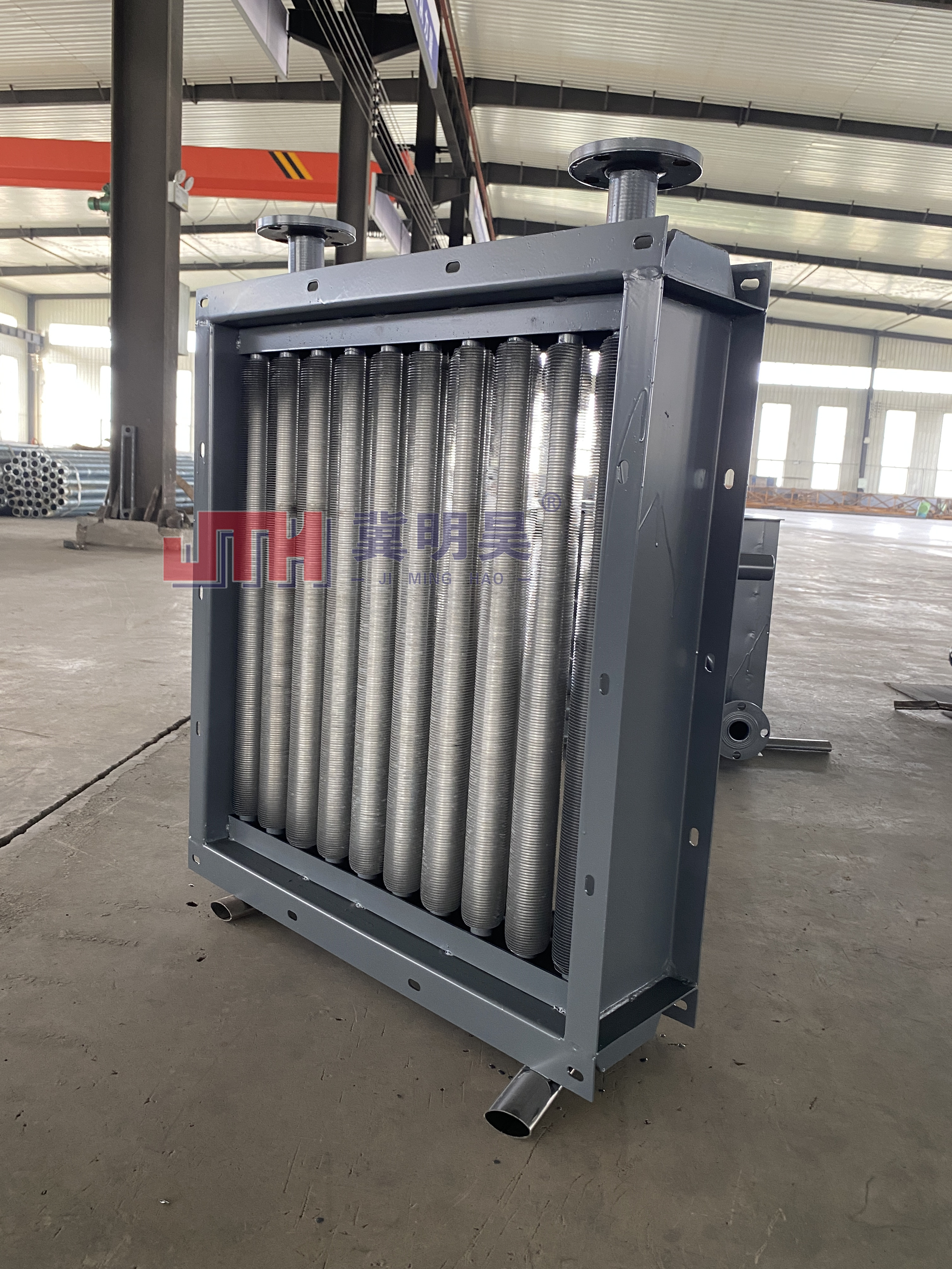
In the wood‑drying sector, drying finned‑tube radiators are standard equipment for drying kilns and veneer drying lines. Wood drying generates large quantities of wood shavings and dust. Models with large fin spacing can be selected to reduce dust clogging and facilitate regular blowing‑off cleaning. The drying temperature can be steadily adjusted to slowly remove internal moisture from wood. By controlling temperature and humidity inside drying kilns, problems such as cracking, warping and deformation of boards are reduced. Uniform wood drying is guaranteed to improve the finished quality of furniture and boards. The equipment is suitable for drying solid wood, veneers, lumber and other materials.
Food‑drying scenarios impose strict cleanliness requirements. Drying finned‑tube radiators can be upgraded to stainless‑steel versions with smooth surfaces that resist corrosion and dirt accumulation, complying with sanitary standards for food production. They are supporting facilities for dehydration production lines of dried fruits and vegetables, seafood, tea, grains, edible fungi and more. Soft and stable hot air with controllable temperature helps preserve the original flavor and nutrition of ingredients and prevents local over‑heating from scorching materials. Easy‑to‑wipe surfaces resist dirt buildup and meet management specifications for food workshops.
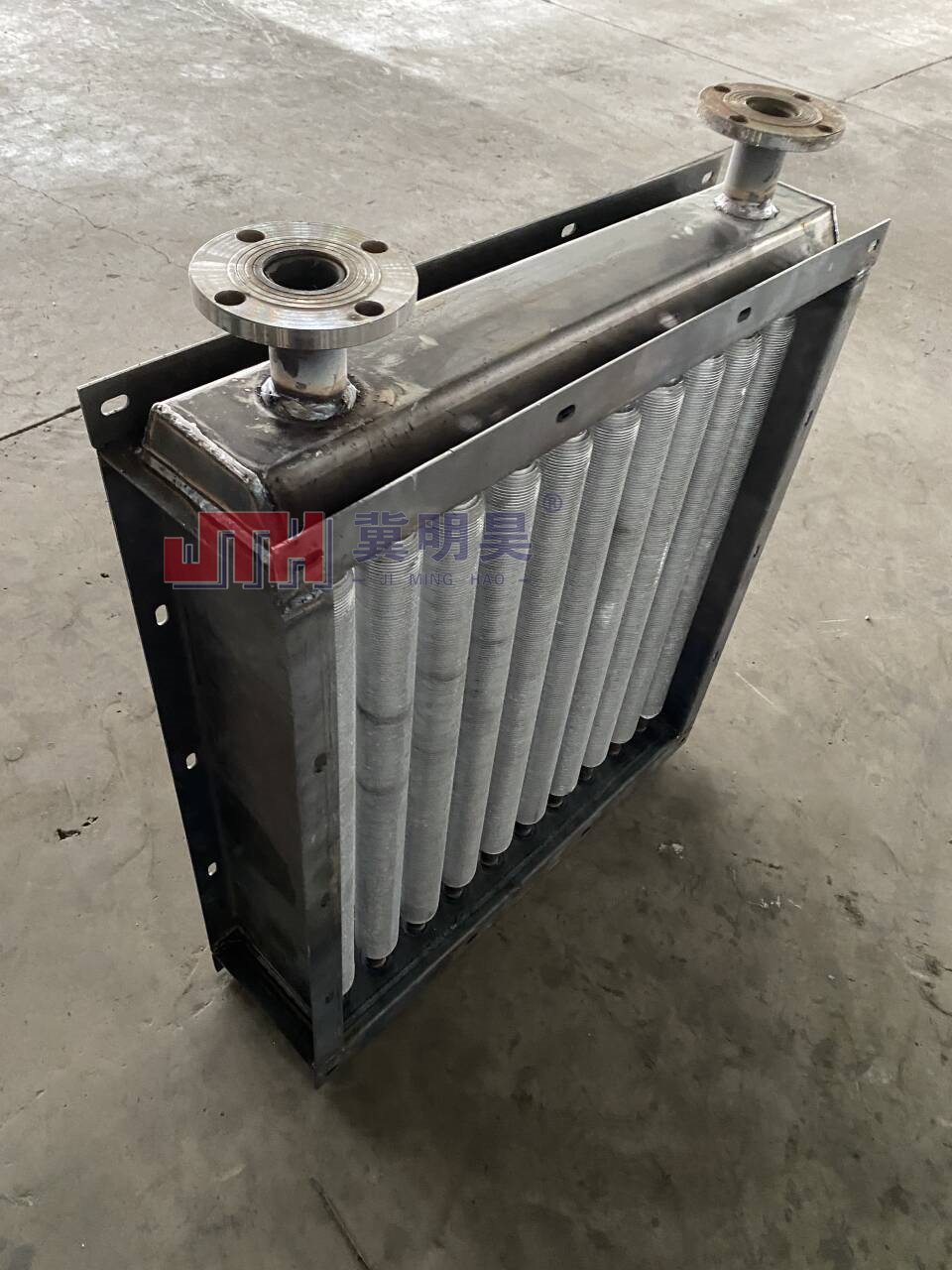
Working conditions in the chemical industry are more complex. Some raw‑material drying processes produce slightly corrosive gas and dust. According to medium characteristics, drying finned‑tube radiators can adopt anti‑corrosion treatments and corrosion‑resistant pipes to resist erosion by acidic and alkaline flue gas. They provide continuous heating for tunnel drying lines of dyes, additives, granular chemical raw materials and inorganic salts, stably controlling drying temperature to remove material moisture. For high‑dust working conditions, soot‑blowing devices can be installed for on‑line cleaning of dust deposits on fins, maintaining heat‑exchange efficiency and ensuring continuous production‑line operation.
Besides the above‑mentioned fields, the radiators are also applicable to drying projects for grain, feed, leather and building materials. Available for single‑unit operation or multi‑unit parallel connection, they fit drying chambers and tunnel kilns of various sizes. With reliable welding performance and favorable pressure resistance, the equipment runs stably under long‑term continuous operation and requires simple later‑stage maintenance. Thanks to flexible customization of materials, structures and heat‑medium solutions, drying finned‑tube radiators satisfy differentiated drying‑process requirements from food, wood, chemical and other sectors, making them the preferred heat‑exchange equipment for numerous drying projects.
Official Website: http://hebeisanreqi.com/
Service Hotline: 0318‑8636713
Mobile: +86 18832832688
Address: No.1126 Yongxing West Road, Jizhou District, Hengshui City, Hebei Province, P.R.China