
Industrial Heating Retrofit: How Radiator Manufacturers Match Steel Radiators to On-Site Project Conditions
文章来源:hsjmh 发表时间:2026-10-19In industrial heating retrofit projects, improper selection of steel radiators may lead to insufficient heat dissipation, corrosion and leakage. This article explains how radiator manufacturers match steel radiators to on-site project conditions. The matching process is elaborated from four dimensions: heat medium parameters, spatial environment, system water quality and installation layout.
1. Verify Heat Medium and System Pressure Parameters
On-site heat media fall into two categories: hot water and steam. Steel radiators for different media have distinct pressure-bearing ratings. Prior to retrofit, it is necessary to confirm the operating pressure of the pipe network as well as supply and return water temperatures. The rated pressure resistance of the selected steel radiator must exceed the system operating pressure to avoid overpressure risks. Steam working conditions impose stricter structural requirements on equipment; ordinary hot-water steel radiators cannot be directly applied.
2. Assess Workshop Space and Environmental Conditions
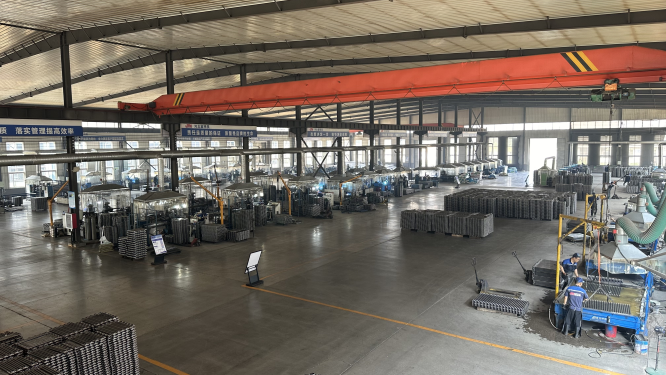
The floor height, building envelope, dust and gaseous environment of industrial workshops directly affect the matching scheme of steel radiators. Heat tends to rise in large-volume spaces. Heat load calculation is required to determine installation positions of radiators. For workshops with heavy dust, steel radiators with simple structures for easy cleaning are preferred. For areas with corrosive gas or high humidity, attention shall be paid to anti-corrosion treatment.
3. Test Water Quality of the Heating System
Steel radiators have specific requirements for heating water. Substandard water quality accelerates internal corrosion and shortens service life. During project retrofit, indicators such as oxygen content and pH value of water shall be tested. If the water quality of the original old pipe network is poor, water treatment measures may be considered simultaneously, or steel radiator types compatible with such water conditions can be adopted.
4. Plan Installation Scheme Based on On-Site Layout
After parameter calculation, the installation position, quantity and pipeline connections of steel radiators shall be planned according to the on-site building structure. Installation is generally prioritized on external walls, doors, windows and other areas with cold air infiltration to optimize indoor air convection. Connection specifications shall match the original pipe network to reduce pipeline modification in the retrofit phase and lower construction difficulty.
Conclusion
For steel radiator selection in industrial heating retrofit, the core is to verify multi-dimensional working condition parameters. Specifications cannot be determined merely by floor area. Heat medium pressure, workshop environment, water quality and on-site layout need to be confirmed in sequence. Then radiator manufacturers can supply steel radiators with corresponding parameters to align equipment performance with project working conditions and ensure long-term stable operation of the heating system.
Q&A
Q: Can ordinary steel column radiators be directly used for steam systems in industrial retrofits?
A: Not recommended. Steam working conditions feature higher temperature and pressure. Ordinary steel column radiators are structurally incompatible, and steel radiator products designed for steam applications should be adopted instead.

