
What Exactly Do Manufacturers Mean by "Internal Anti‑Corrosion Treatment" for Radiators, and Which Usage Stages Does It Affect?
文章来源:hsjmh 发表时间:2026-10-9When engineering purchasers select radiators, they often pay attention to the internal anti‑corrosion process. However, many do not fully understand its impacts across the full service cycle of equipment.
Simply put, internal anti‑corrosion refers to protective coating applied to the inner cavity of radiators, which isolates heating medium from direct contact with base metal. Its functions cover multiple stages including pressure testing, normal operation and heating shutdown.
First comes the system water‑filling and pressure‑testing phase. Heating pipe networks contain complex water quality; dissolved oxygen and ions in water can corrode metal. Without reliable internal anti‑corrosion treatment, rust and scale will gradually form on inner walls once water fills the system. Rust residues may flow into pipelines and valves along with water flow, causing pipeline blockages and impairing the smooth circulation of the whole heating system.
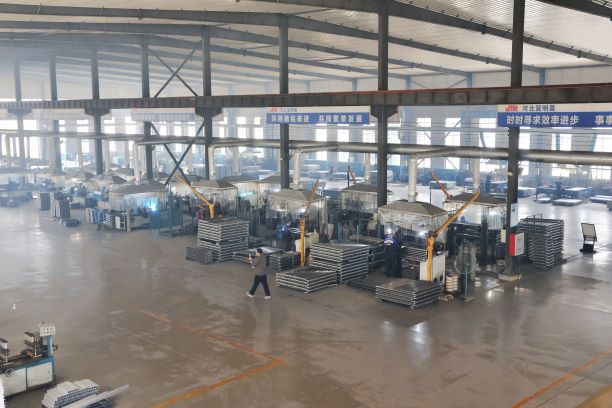
Second is daily heating operation. Under long‑term high‑temperature working conditions, corrosion reactions accelerate. Oxide layers generated by inner‑wall rusting will increase thermal resistance and gradually lower heat‑exchange efficiency. An intact internal anti‑corrosion coating reduces accumulation of corrosive by‑products on inner walls and maintains stable heat‑exchange performance.
The post‑heating maintenance phase is also critical. After heating stops, residual water remains in pipe networks. The humid, enclosed environment is highly prone to electrochemical corrosion. The internal anti‑corrosion coating forms a barrier on pipe surfaces, lowering risks of pitting corrosion and perforation during idle periods and extending the service life of equipment.
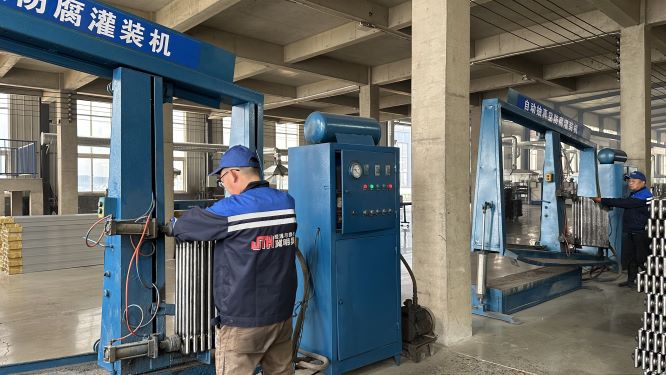
Nevertheless, internal anti‑corrosion has its limitations. Once the coating suffers knocks or damage, damaged spots will become focal points for concentrated corrosion. Besides, it cannot offset continuous corrosion caused by poorly controlled pipe‑network water quality and serves merely as one of the protective measures.
For engineering model selection, apart from checking the internal anti‑corrosion process, comprehensive evaluation should be carried out in light of heating medium and pipe‑network working conditions. A proper water‑treatment scheme shall be matched to better guarantee stable operation of the complete heating system.
Official Website: [http://hebeisanreqi.com/](http://hebeisanreqi.com/)
Service Hotline: 0318‑8636713
Contact Number: 18832832688
Company Address: No.1126 Yongxing West Road, Jizhou District, Hengshui City, Hebei Province

